


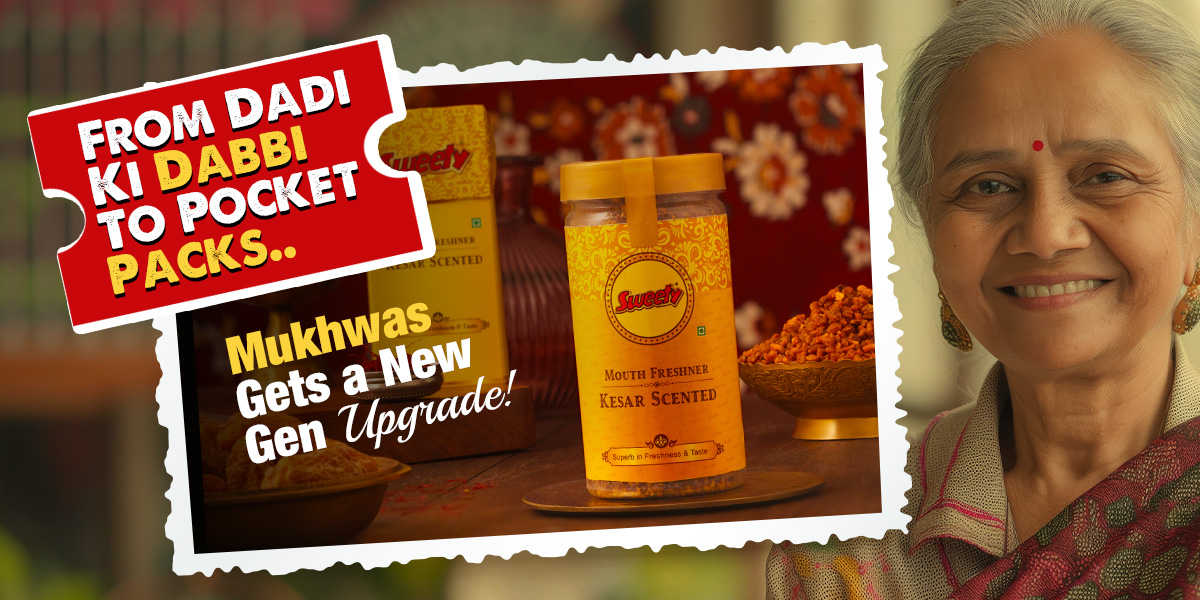
There was a time when mouth fresheners belonged to one fixed place in the house. A small steel dabbi is sitting quietly beside the dining table. Opened after meals. Passed around by dadi or nani with a simple like,” Thoda lelo.”
No branding. No aesthetics. No flavours named after desserts. No Instagram stories featuring mouth fresheners next to iced coffee and laptops..
But somewhere between changing lifestyles, fast-moving cities, and a generation obsessed with convenience and self-expression, mukhwas quietly evolved.
Today, it travels in pockets instead of kitchen shelves. It sits beside car keys, perfumes, and wireless earbuds. And surprisingly, New Generation is one of the biggest reasons behind this transformation.
What was once considered “traditional” is now becoming trendy again just with better packaging, fresher flavours, and a completely different identity.
This is the story of how mukhwas went from dadi ki dabbi to modern pocket packs.
The Emotional Connection Never Left

Before understanding the Gen Z shift, it’s important to understand one thing: Mukhwas was never just a product in Indian households.
It was a habit. A ritual. A small cultural moment after meals.
Whether it was fennel seeds, mishri, supari blends, cardamom, or roasted seeds, every family had its own version. Some kept homemade mixes. Some preferred market favourites. But the emotional connection remained the same.
The interesting part? Gen Z didn’t reject this tradition. They simply redesigned the way they consume it. And that’s exactly why the category is witnessing a modern revival instead of disappearing.
Why Gen Z Is Suddenly Interested in Mukhwas Again
At first glance, mukhwas and Gen Z seem like completely opposite worlds.
One feels rooted in tradition.
The other thrives on trends, speed, and constant change.
But when you look closely, the connection starts making sense.
1. Convenience Matters More Than Ever
This generation loves products that fit into daily movement. People are constantly travelling between offices, cafes, colleges, gyms, and social gatherings. Carrying something simple, compact, and instantly refreshing fits naturally into this lifestyle.
Pocket-sized mukhwas packs solve exactly that problem. No mess. No preparation. No effort. Just open, consume, and continue your day.
2. Freshness Has Become Part of Personal Grooming
Earlier, mouth fresheners were mostly linked to digestion or post-meal habits. Today, freshness is also connected to confidence and social presence.
Whether someone is walking into a meeting, recording content, going on a date, or sitting in a car with friends, people are becoming more conscious of how they present themselves. That small habit of carrying a mouth freshener now feels less “traditional” and more lifestyle-oriented.
3. Packaging Changed the Entire Perception
One of the biggest reasons younger consumers are reconnecting with mukhwas is presentation. Traditional products often struggled because they looked outdated.
Modern brands changed that.
Sleek pouches. Stylish jars. Pocket containers. Premium colour palettes. Resealable packs. Suddenly, mukhwas stopped looking like an “old-school product” and started feeling modern without losing its Indian identity. And Gen Z notices packaging more than most generations before them.
For them, packaging is not just protection. It’s personality.
The Rise of Flavour-Driven Consumption
Another major shift is flavour experimentation. Traditional mukhwas usually stayed within familiar taste profiles. But modern consumers enjoy variety and novelty.
Today, younger buyers actively explore:
- Mint-based blends
- Sweet and floral combinations
- Dry fruit-inspired variants
- Unique flavours
- Cooling mouth refreshers
- Fusion no-tobacco supari experiences
This flavour evolution has helped brands turn occasional consumption into repeat snacking behaviour. People no longer consume mukhwas only after meals. Some consume it while travelling, some during work breaks, and some simply because they enjoy the taste. That changes the entire category.
Social Media Played a Bigger Role Than Expected
Many product categories are becoming visual-first, and mukhwas is no exception.
Gen Z discovers products through:
- Instagram reels
- Influencer’s recommendations
- Aesthetic desk setups
- Lifestyle content
- Cafe culture visuals
- “What’s in my bag?” videos
A well-designed mouth freshener pack now appears naturally inside lifestyle-driven content. And once a product becomes visually shareable, younger audiences begin associating it with identity rather than utility.
This is one reason modern mukhwas brands are investing heavily in branding, storytelling, and visual presentation instead of only focusing on distribution.
The Shift From “After Meal Product” to “Lifestyle Companion”

This is probably the biggest transformation happening in the category right now. Mukhwas is no longer limited to dining tables.
It’s becoming:
- A car essential
- A desk companion
- A travel item
- A quick confidence refresher
- A social carry product
- A modern Indian snack alternative
This shift matters because it expands consumption occasions dramatically.
The more moments attached to a product, the stronger the category becomes.
Gen Z Loves Products With Cultural Roots
Interestingly, younger audiences are also rediscovering Indian-origin products.
Across categories, there’s growing appreciation for things that feel culturally familiar but modern in presentation. People want products that feel authentic without feeling outdated.
That’s why categories like:
- Traditional beverages
- Regional snacks
- Ayurvedic wellness products
- Indian confectionery
- Mukhwas and supari blends
They are finding relevance again among younger consumers. Gen Z doesn’t always reject tradition. They simply expect tradition to evolve with their lifestyle.
Modern Retail Is Accelerating the Trend
The visibility of mukhwas has also changed significantly. Earlier, these products were mostly seen near cash counters in local shops.
Now they appear across:
- Modern retail shelves
- Premium grocery stores
- Quick commerce apps
- E-commerce platforms
- Airport kiosks
- Lifestyle stores
This wider visibility changes perception. When consumers repeatedly encounter a product in modern environments, they automatically start viewing it differently. Accessibility creates familiarity, and familiarity builds adoption.
Health Awareness Is Influencing Choices Too
Today’s consumers read labels more carefully than previous generations. People increasingly prefer products that feel cleaner, lighter, and more transparent.
This has encouraged brands to focus on:
- Better ingredient communication
- Cleaner packaging design
- Seed-based blends
- Balanced flavour profiles
- Hygienic manufacturing perception
While indulgence still matters, modern consumers also want reassurance. Especially Gen Z.
They may enjoy flavour-first products, but they also appreciate brands that communicate quality and trust clearly.
The Future of Mukhwas Looks Surprisingly Modern
If someone had predicted ten years ago that mouth fresheners would become part of youth lifestyle culture, most people would have laughed. But consumer behaviour changes faster than expectations. Today, mukhwas is entering a new phase where tradition and modern branding coexist. The emotional familiarity of Indian households is still there. The difference is that now it comes inside sleek pocket packs instead of steel dabbis.
And honestly, that evolution feels natural. Because the best products are not the ones that abandon tradition. They are the ones that adapt tradition to modern life without losing its soul.
Final Thoughts
The journey from dadi ki dabbi to Gen Z pocket packs is more than a packaging story. It reflects how consumer culture evolves across generations. A product once associated only with family dining tables is now becoming part of everyday modern lifestyles. Compact. Stylish. Convenient. Shareable. Familiar.
That balance is exactly what makes mukhwas relevant again. And as younger consumers continue blending tradition with personal identity, the category is likely to grow far beyond its original image.
Because sometimes, the oldest habits survive the longest, they just return wearing new packaging.