

India’s FMCG market is full of familiar products. Biscuits, packaged snacks, beverages and personal care essentials compete for attention on retail shelves every day. Yet, some opportunities are found in categories that consumers already know and use but businesses may not always give enough attention to.
One such category is mouth fresheners.
From traditional saunf and elaichi to flavoured mukhwas, scented supari and modern mouth freshener products, these items have long been part of Indian consumption habits. They are commonly associated with meals, hospitality, social gatherings and everyday refreshment.
Despite this familiarity, the category still offers opportunities for product innovation, better retail visibility, convenient packaging and wider distribution.
For FMCG brands, retailers and distributors, the question is no longer simply whether consumers recognise mouth fresheners. It is how businesses can make these products more accessible, relevant and appealing to changing consumer preferences.
As companies explore fast-growing FMCG categories in India in 2026, mouth fresheners deserve a closer look.
1. Why Mouth Fresheners Deserve More Attention in India’s FMCG Market
The most promising FMCG opportunities do not always come from creating entirely new consumer needs. Sometimes, they come from serving existing habits in better ways.
Mouth fresheners are a good example.
In many Indian households, saunf, cardamom and other traditional ingredients are familiar after-meal choices. Over time, the category has expanded to include different flavour combinations, ready-to-carry packs, premium assortments and contemporary mouth freshener formats.
This creates an interesting opportunity for brands: combining familiar tastes with modern product experiences.
Industry estimates also point towards continued growth potential. A market outlook published by 6Wresearch in November 2025 projected that India’s mouth freshener market could expand at a compound annual growth rate (CAGR) of 8.2% between 2026 and 2032. This is a forecast, not a guarantee, but it indicates why the category merits attention.
The opportunity rests on three factors:
- Established consumption habits: Consumers are already familiar with many ingredients and product formats.
- Scope for innovation: Brands can explore new flavours, formats, pack sizes and product experiences.
- Multiple retail touchpoints: Products can be offered through neighborhood shops, supermarkets, selected food outlets and online channels.
For businesses looking beyond crowded FMCG segments, these factors make mouth fresheners a category worth evaluating.
2. Changing Consumer Preferences Are Creating New Opportunities

Consumer preferences continue to evolve across the FMCG industry. Convenience, affordability, variety and product experience all influence purchasing decisions.
Mouth fresheners can respond to these expectations in several ways.
Convenience for Everyday Consumption
Consumers increasingly look for products that fit easily into their routines. Compact packs, resealable pouches and individually portioned formats can make mouth fresheners convenient to carry and consume.
For example, a consumer may prefer a small pack for a commute, a workday, a family outing or an after-meal occasion.
For manufacturers, convenient packaging is more than a design choice. It can help position a familiar product for additional consumption occasions.
More Choice Through Flavours and Formats
Traditional ingredients remain an important foundation for the category. At the same time, brands can explore different combinations of fennel, cardamom, rose, mint and other suitable ingredients to offer variety.
The goal is not to change familiar tastes simply for novelty. It is to give consumers more options while maintaining product quality and consistency.
Affordable Entry Points
Price continues to influence purchase decisions across FMCG categories.
Smaller packs can offer consumers an accessible entry point while allowing retailers to serve different spending preferences. However, the right price and pack size must also work with production costs, retailer margins and distribution economics.
For brands, the opportunity lies in finding a balance between affordability, perceived value and sustainable business performance.
3. Why Mouth Fresheners Can Work as Impulse Purchase Products
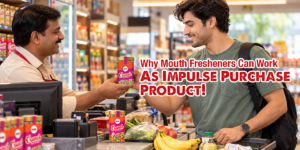
Some FMCG products are planned purchases. Others are picked up when consumers notice them at the right moment.
Mouth fresheners can fall into the second category, particularly when they are positioned around relevant occasions and places where consumers can easily see them.
Consider a neighborhood grocery store. A customer arrives to buy household essentials. While paying at the counter, they notice a small pack of mouth freshener and decide to add it to the purchase.
The product was not necessarily on the original shopping list. Visibility and convenience helped create the buying opportunity.
This is why retail placement can be just as important as product availability.
Where Can Retailers Place Mouth Fresheners?
Retailers can test placements such as:
- Billing counters and checkout areas.
- Shelves near relevant packaged food categories.
- Clearly organized sections for mouth fresheners and traditional mukhwas.
- Small displays that make different pack sizes easy to compare.
Placement should depend on the store layout, customer behavior and applicable product-display requirements.
Retailers should also monitor whether a placement generates incremental sales rather than simply moving purchases from another shelf.
For FMCG brands, working with retailers to improve visibility can create a stronger connection between product availability and consumer demand.
4. The Role of Small Packs in FMCG Category Growth
Small packs have an important role in India’s value-conscious FMCG market. They allow consumers to try a product without committing to a larger purchase and help retailers offer products across different price points.
The wider FMCG industry has continued to pay attention to pack sizes and affordability. NielsenIQ’s 2026 reporting on India’s FMCG market also highlights the importance of pricing, smaller packs and changing channel dynamics.
For the mouth freshener category, smaller formats can support several business objectives.
Trial: Consumers can try a new flavour or product with a relatively small initial purchase.
Accessibility: Retailers can offer options for different budgets and consumption occasions.
Range expansion: Brands can introduce new variants without requiring every consumer to buy a large pack.
Retail visibility: Compact packs can be displayed near billing counters, subject to available space and suitable merchandising.
However, a low price alone does not guarantee success. Product quality, taste, packaging, retailer margins, repeat purchases and reliable supply all contribute to long-term performance.
The strongest strategy is to build a product offering that combines accessible pricing with a consistent consumer experience.
5. Traditional Mukhwas Meets Modern FMCG Innovation
One of the category’s most interesting characteristics is the connection between traditional consumption habits and modern product development.
Mukhwas has a familiar place in Indian food culture. Ingredients such as saunf and elaichi are widely recognised, while different regions and households have their own preferences.
Modern FMCG brands can build on this familiarity by improving how products are developed, packaged, presented and distributed.
What Can Innovation Look Like?
Flavour innovation: Offering carefully developed flavour combinations that provide variety while respecting familiar preferences.
Packaging innovation: Using practical, resealable and hygienic packaging suited to different occasions.
Product differentiation: Creating clear distinctions between traditional mouth fresheners, flavoured mukhwas, premium assortments and other relevant product formats.
Brand storytelling: Communicating product ingredients, quality standards, sourcing practices and brand heritage clearly.
Occasion-based positioning: Presenting products for after-meal refreshment, hospitality, family gatherings, travel and everyday use where appropriate.
Innovation does not always require a completely new product category. Sometimes, better packaging, a clearer proposition or a more convenient format can make an established product more relevant.
Brands should ensure that all product claims are supported by appropriate evidence and comply with applicable food safety and labeling requirements.
6. The Distribution Opportunity: Reaching Beyond Established Markets

A product’s potential depends not only on consumer demand but also on whether consumers can find it consistently.
India’s FMCG market includes a diverse mix of neighborhood retailers, wholesalers, distributors, organized retail and digital commerce. Each channel serves different shopping habits and business requirements.
For mouth freshener brands, distribution strategy can influence both trial and repeat purchases.
General Trade: The Importance of Retail Relationships
Neighborhood grocery stores and other general trade outlets remain relevant touchpoints for everyday FMCG purchases.
Retailers can help brands understand which flavours sell, which pack sizes attract attention and what customers request most frequently.
Brands and distributors can use this feedback to improve product availability, assortment planning and market servicing.
Expanding into New Markets
Demand can differ considerably between cities, towns and regions. A flavour that performs well in one market may not achieve the same results elsewhere.
Instead of expanding indiscriminately, businesses can identify suitable markets, study local preferences and test products in selected retail clusters.
Useful indicators include:
- Number of active outlets stocking the product.
- Availability across priority retail locations.
- Sales per outlet over a defined period.
- Repeat orders from retailers.
- Consumer feedback on taste, packaging and price.
- Stock availability and replenishment frequency.
These measures help businesses distinguish genuine demand from temporary sales spikes.
E-Commerce and Quick Commerce
Digital channels can provide additional opportunities for product discovery and convenience, particularly in markets where consumers use them for grocery purchases.
NielsenIQ reported in March 2026 that e-commerce accounted for 6% of urban India’s FMCG sales in the October–December 2025 period, with quick commerce contributing more than three-quarters of e-commerce FMCG sales. These figures relate to the wider FMCG market, not specifically to mouth fresheners.
For brands, digital availability can complement physical retail by helping consumers discover product variants, compare pack sizes and reorder familiar products.
The right channel mix depends on the product’s economics, target audience, geographic reach and distribution capabilities.
7. What Retailers Should Consider Before Adding Mouth Fresheners
For retailers, adding a product category should be a business decision rather than simply a response to a trend.
Mouth fresheners may offer an additional sales opportunity, but performance depends on the store’s customers, product selection and execution.
Here are five practical considerations.
1. Choose a Relevant Product Range
Start with products that suit the store’s customer base. A focused assortment is often easier to manage than stocking too many similar variants.
2. Evaluate Retail Margins
Compare purchase costs, selling prices, available schemes and expected sales velocity. A product with an attractive margin may still perform poorly if it does not sell regularly.
3. Test Counter Placement
Try displaying selected products near the billing counter or another relevant location. Compare sales before and after the placement over a reasonable period.
4. Monitor Replenishment
Track which variants sell consistently and reorder accordingly. Avoid tying up too much working capital in slow-moving inventory.
5. Gather Customer Feedback
Ask customers which flavours, pack sizes and price points they prefer. Feedback can help retailers refine their assortment and communicate useful insights to distributors.
The objective is simple: build a category that earns its shelf space through customer relevance and consistent sales.
8. How FMCG Brands Can Build a Stronger Mouth Freshener Business
For manufacturers, the opportunity goes beyond launching another flavour or entering another retail market.
Long-term growth requires a coordinated approach to product development, brand positioning, distribution and retail execution.
Build a Clear Brand Proposition
Consumers should understand what makes a product distinctive. That difference may come from its flavour, ingredients, convenience, packaging, heritage or intended consumption occasion.
Clear positioning helps a brand compete on more than price alone.
Invest in Consistent Product Quality
Taste, freshness, packaging integrity and product consistency influence the consumer experience.
Quality systems and appropriate food safety practices are essential to building trust and encouraging repeat purchases.
Strengthen Distributor and Retailer Engagement
Trade partners need clear product information, reliable supply, commercially viable margins and practical support.
Regular market visits, structured feedback and transparent scheme communication can help businesses identify execution gaps and respond to local needs.
Use Data to Guide Expansion
Brands should evaluate distribution and sales performance before expanding into new locations or channels.
Outlet coverage, sales velocity, repeat ordering, stock availability and consumer feedback can provide a more reliable picture of category performance than reach alone.
Communicate Responsibly
Marketing should explain the product clearly and avoid unsupported claims about health, digestion or other functional benefits.
Responsible communication, transparent labeling and consistent quality can support sustainable brand growth.
9. The Challenges Businesses Should Not Ignore
An emerging opportunity is not automatically an easy business.
Mouth freshener brands must consider several challenges before investing in expansion.
Intense competition: Established brands and regional players may already have strong retailer relationships and consumer recognition.
Price sensitivity: Consumers may compare products closely on price, pack size and perceived value.
Retail execution: Limited shelf space and inconsistent availability can reduce product visibility.
Product differentiation: Similar flavours and formats can make it difficult for brands to establish a distinctive position.
Distribution economics: Serving new markets requires careful consideration of logistics, margins, order sizes and replenishment costs.
Compliance and quality: Food safety, ingredient declarations, labeling and applicable regulations must remain central to product development and marketing.
Businesses that address these challenges early are better positioned to evaluate opportunities realistically and build a sustainable presence.
10. Is the Mouth Freshener Category Worth Watching in 2026?
The category deserves attention because it combines familiar consumer habits with several areas of potential development: packaging innovation, affordable formats, differentiated flavours, retail visibility and wider distribution.
Industry forecasts provide useful context, but they should not be treated as proof that every brand or market will grow at the same rate.
The actual opportunity depends on consumer preferences, competition, product quality, channel economics and execution.
For retailers, mouth fresheners can be a category to test for additional sales opportunities. For distributors, they can be worth evaluating as part of a relevant FMCG portfolio. For manufacturers, they offer room to develop products around established consumption habits while adapting to changing expectations.
The key is to look beyond category awareness and understand what drives actual purchase and repeat demand.
Conclusion: Sometimes, the Next FMCG Opportunity Is Already Familiar
India’s FMCG market continues to evolve, creating opportunities for businesses that understand consumers and execute well at the retail level.
Mouth fresheners illustrate an important principle: a product does not need to be new to offer room for innovation.
A familiar category can create fresh opportunities through convenient packaging, relevant product choices, stronger retail visibility, reliable distribution and a clear brand proposition.
For businesses exploring fast-growing FMCG categories in India in 2026, the mouth freshener segment is worth evaluating with a practical, data-led approach.
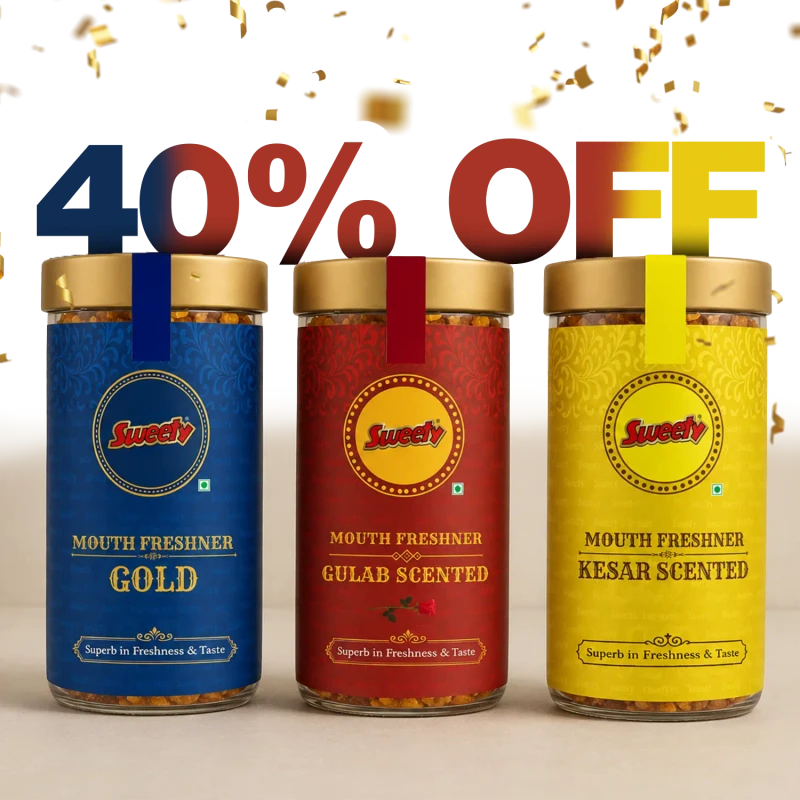
At Sweety by MR Group, the broader opportunity lies in bringing familiar mouth freshener experiences to consumers through relevant products, thoughtful innovation and strong market connections.
Because sometimes, growth does not begin with an entirely new idea. It begins with seeing new possibilities in something consumers already know and enjoy.
Frequently Asked Questions (FAQs)
1. What are some fast-growing FMCG categories in India in 2026?
Categories worth monitoring include convenient packaged foods, personal care, selected health and wellness products, and mouth fresheners. Growth varies by segment, region, price point and distribution channel, so businesses should review current market data before making investment decisions.
2. Why is the mouth freshener category relevant to FMCG businesses?
Mouth fresheners benefit from established consumption habits and offer opportunities for product variety, convenient packaging, impulse purchases and wider retail distribution.
3. Is a mouth freshener business suitable for small retailers?
It may be suitable for retailers whose customers purchase these products. Retailers should evaluate local demand, supplier reliability, margins, pack sizes and stock turnover before expanding their assortment.
4. How can FMCG brands increase mouth freshener sales?
Brands can work on product quality, relevant flavours, suitable pack sizes, retail visibility, distributor engagement, reliable availability and consumer feedback. Performance should be measured through actual sales and repeat purchases.
5. What role does packaging play in mouth freshener sales?
Packaging can influence convenience, product presentation, portability and perceived value. Resealable pouches and smaller packs may suit particular consumption occasions, provided they meet product protection and regulatory requirements.
6. Can mouth fresheners be sold through online and quick-commerce platforms?
Yes. These channels can support product discovery and convenient purchasing where the category is available and commercially viable. Brands should evaluate platform fees, fulfillment costs, product visibility and repeat-order potential before expanding.
7. What should distributors consider before adding a mouth freshener brand?
Distributors should assess retailer demand, product differentiation, margins, supply reliability, market coverage, inventory requirements and the brand’s ability to support retail execution.